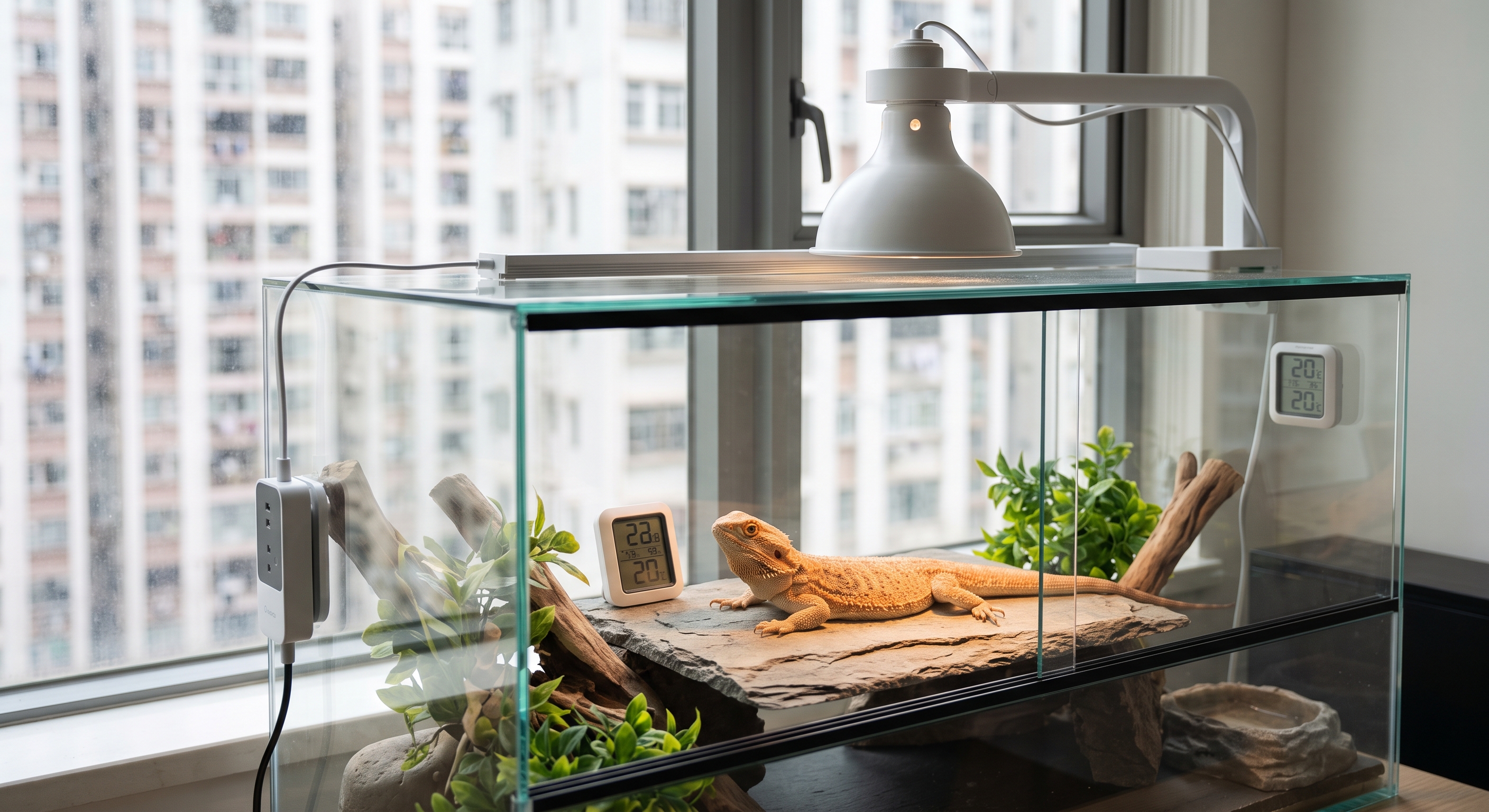
Precision Management for Bearded Dragons: Achieving Ecological Stability in the Modern Urban Reptile Enclosure
"With their calm demeanor and prehistoric charm, bearded dragons have become a popular reptile companion in Hong Kong." However, replicating an arid Australian desert environment within a compact urban apartment requires a disciplined, data-driven approach.
Building a stable habitat goes beyond simply providing a glass enclosure; it involves creating a controlled micro-ecosystem. By applying Precision Management principles and smart climate technology, pet owners can overcome local challenges such as low natural sunlight and high ambient humidity.
1. Physiological Foundations: UVA/UVB and Circadian Lighting
As ectothermic animals, bearded dragons rely entirely on external heat and light to regulate their metabolic health and digestive functions. Maintaining a precise lighting setup is critical to their physiological balance:
UVB Spectrum: Continuous access to high-output UVB (10%–12% output) is non-negotiable. UVB light enables the synthesis of Vitamin D3, which allows the body to absorb calcium. Without proper UVB exposure, reptiles are at high risk of developing Metabolic Bone Disease (MBD)—a severe, preventable condition.
Circadian Rhythm Control: Using automated digital timers to manage a strict 12-to-14-hour daytime and 10-to-12-hour nighttime cycle helps maintain stable cognitive function and prevents chronic stress.
2. Managing Temperature Gradients and Humidity Barriers
Hong Kong's subtropical weather poses significant challenges for desert species. Managing the internal vivarium climate requires active intervention:
Thermal Gradients: Establish a distinct temperature gradient within the enclosure, featuring a hot basking zone (38°C–42°C) and a cooler retreat area (25°C–28°C). This allows the reptile to self-regulate its body temperature naturally to optimize digestion.
Humidity Control: Hong Kong’s seasonal humidity often exceeds 80%, whereas bearded dragons require an arid 30%–40% range. High moisture levels encourage respiratory infections and fungal skin issues. Utilize digital hygrometers paired with nearby dehumidifiers or ventilated terrarium designs to maintain a dry environment.
3. Behavioral Enrichment and Foraging Outlets
In a confined enclosure, mental enrichment is essential to prevent lethargy and manage body condition:
Interactive Foraging: Instead of dish-feeding live insects, place feeder insects inside specialized foraging bowls or puzzle feeders. Encouraging the reptile to stalk and capture prey stimulates natural hunting instincts, burns excess calories, and prevents obesity.
Dedicated Safety Anchors: Ensure the habitat includes semi-enclosed hiding caves at both the warm and cool ends. Having secure retreats grants the reptile psychological safety when it needs to rest or decompress.
4. Tracking Health Data and Behavioral Changes
Reptiles often mask signs of illness until a condition becomes advanced. Utilizing home monitoring technology—such as smart sensors or cameras—allows owners to track daily basking durations, movement patterns, and feeding frequency. Catching subtle changes early, such as reduced basking time or sudden loss of appetite, provides a vital early warning system for veterinary care.
Providing your reptile with an optimized, climate-controlled ecosystem ensures long-term vitality. Through precise environmental control and routine health tracking, urban reptile owners can offer their desert companions a safe, thriving home for years to come.

Philip Chau
Hi, I’m Philip Chau, one of the founders of Furrenz Pet Sitters, coordinating the company’s marketing.