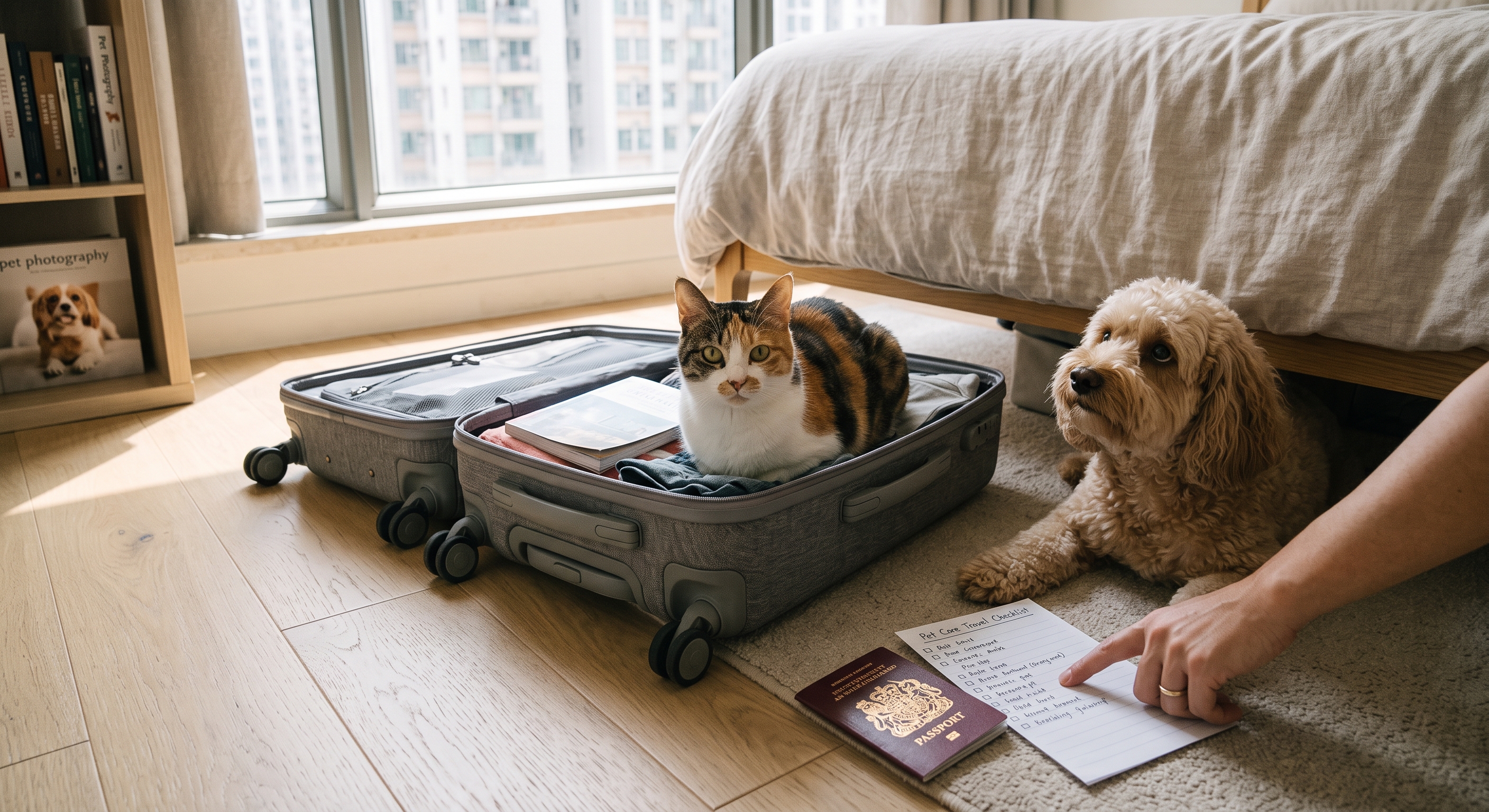
The Ultimate Pet Care Travel Checklist for Hong Kong Pet Parents
Heading overseas for a well-deserved vacation or business trip brings excitement—and understandable concern for the pets left behind.
Planning for a trip involves endless to-do lists, but leaving pet care preparations to the very last minute increases the risk of overlooking critical home safety or dietary details.
Whether you rely on trusted friends, family, or professional care services while away, following a structured pre-departure checklist ensures your pet’s daily routine remains unbroken and safe. Here is a comprehensive preparation guide for Hong Kong pet parents before heading to the airport.
1. Dietary Supplies: Calculate a 5 to 7 Day Safety Cushion
Travel disruptions, flight delays, and unexpected weather events happen.
Food and Treat Reserves: Stock enough main food, wet cans, and specialized treats for your entire trip, plus an extra 7 days of inventory to prevent emergency diet changes that cause digestive upset.
Portioning and Pre-Labeling: If your pet follows strict dietary measurements, pre-apportion meals into airtight bags clearly labeled with morning/evening intake amounts.
Hygiene Supplies: Ensure ample supplies of cat litter, puppy pee pads, and pet-safe cleaning solutions are stored in easily accessible spots.
2. Comprehensive Home Hazard and Environment Check
Your home environment must remain a safe sanctuary while you are away.
Window and Balcony Security: Double-check that all window mesh screens, balcony latches, and safety gates are securely fastened and damage-free.
Hazard Storage: Store away potential household dangers into secured cabinets—including exposed charging cables, human medications, cleaning chemicals, and toxic indoor plants (such as lilies or poinsettias).
Climate and Tech Checks: Set automated climate control devices (dehumidifiers or air conditioners) to target comfortable levels, and test that smart cameras and automated feeders are connected to stable Wi-Fi.
3. Medical Documentation and Emergency Authorization
In the rare event of a health emergency while you are mid-flight, clear medical information saves crucial time.
Pet Information Binder: Compile a dedicated folder containing your pet’s microchip number, vaccination records, existing medical history, and prescription medication instructions.
Veterinary Contact Sheet: Clearly note down the contact details of your primary veterinary clinic, alongside the nearest 24-hour emergency hospital.
Emergency Medical Authorization Letter: Draft a simple written statement authorizing your caretaker to seek immediate veterinary care if you are unreachable due to flight times or bad connectivity, outlining your commitment to medical costs.
4. Behavioral Briefings and Familiarization Visits
Every animal possesses unique quirks, favorite hiding spots, and comfort zones.
Document Daily Routines: Write down behavioral traits—such as fear of thunderstorms, food aggression, or preferred walking routes and harness types.
Pre-Trip Walkthrough: Arrange a brief home walkthrough with your caretaker 3 to 5 days prior to departure. This allows your pet to become familiar with their scent and voice in your presence while ensuring key codes, locks, and water sources are clearly explained.
Systematic preparation turns travel anxiety into complete peace of mind. By ticking through these fundamental steps, you can enjoy your travels knowing your companion is safe, well-stocked, and cared for in their comfortable home environment.

Viola Leung
Hi, I’m Viola Leung, founder of Furrenz Pet Sitters, responsible for the company’s day-to-day operations.