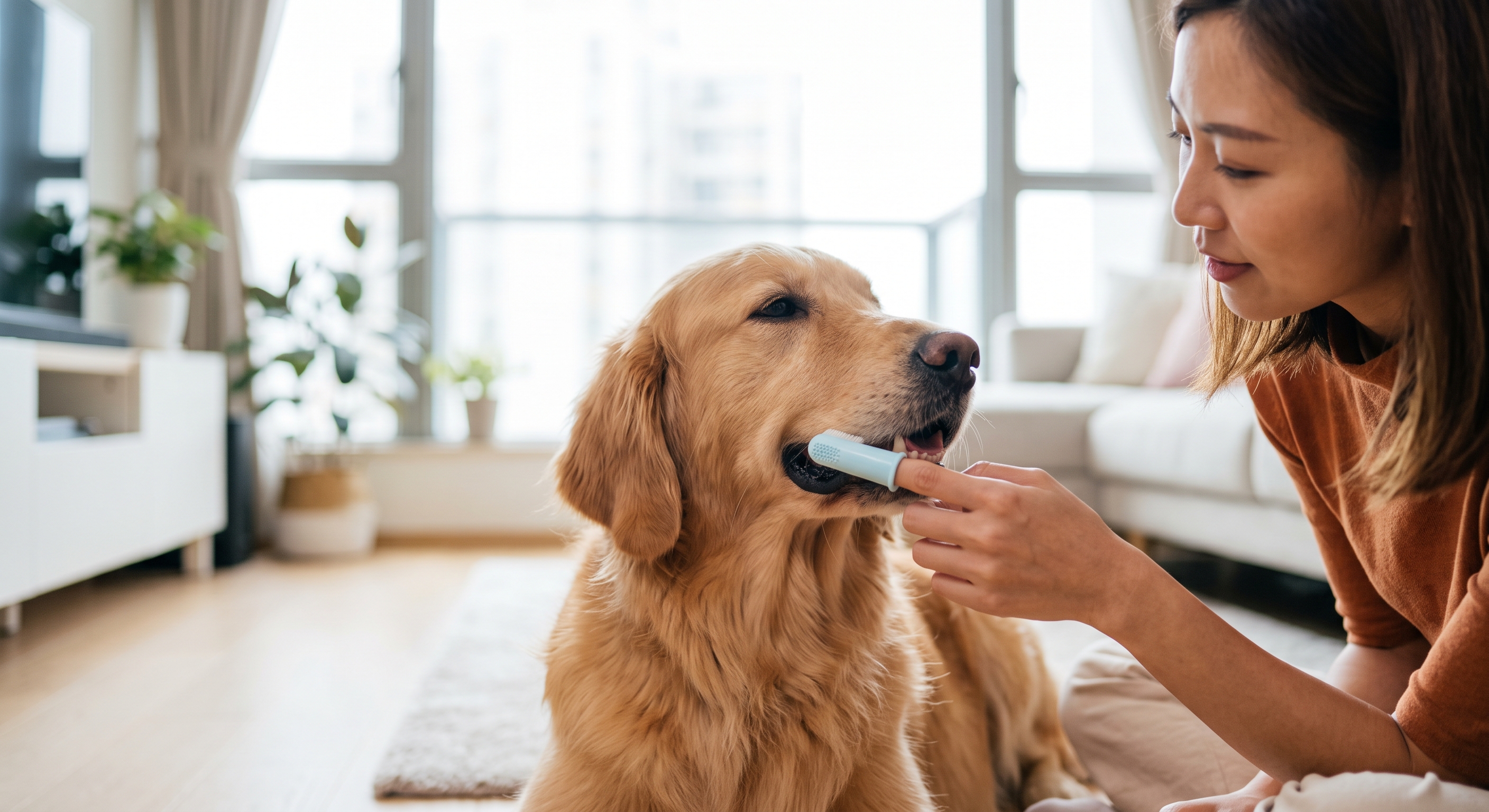
Preventing Periodontal Disease in Dogs & Cats: The Complete Dental Care & Toothbrushing Guide
"Does your pet have noticeable bad breath or brownish buildup along their gumline?"
Many pet parents assume that bad breath is just a normal sign of aging, but persistent odor is actually one of the earliest warnings of Periodontal Disease in pets. Clinical studies show that over 80% of dogs and cats over the age of three suffer from some form of oral health decline.
Periodontal disease causes discomfort, bleeding gums, and tooth loss. Left unchecked, oral bacteria can enter the bloodstream through inflamed gum tissues, causing chronic damage to essential organs like the heart, liver, and kidneys. Establishing an effective home dental routine is vital for long-term health.
1. How Periodontal Disease Develops
Food particles combining with saliva form a sticky film called Dental Plaque. If not removed within 24 to 48 hours, plaque absorbs minerals from saliva and hardens into Tartar (Calculus).
Stage 1 (Gingivitis): Tartar accumulation causes redness, inflammation, and bleeding along the gums. At this early stage, the damage is reversible with professional care.
Stages 2 to 4 (Periodontitis): Bacterial infection spreads deeper beneath the gumline, destroying supporting bone structures, causing severe pain, root exposure, and eventual tooth loss.
2. Step-by-Step Low-Stress Toothbrushing Guide
Physical brushing remains the single most effective way to eliminate plaque. Forcing the process creates fear and resistance, so a gradual, positive reinforcement approach works best:
Step 1: Flavor and Touch Introduction (Days 1–3) Place a small amount of pet-safe enzymatic toothpaste (never human toothpaste, as fluoride and xylitol are toxic to pets) on your fingertip and let your pet lick it off as a treat.
Step 2: Gum Desensitization (Days 3–5) Gently lift your pet's lips and rub your toothpaste-coated finger along their outer teeth and gums for 3–5 seconds. Follow immediately with verbal praise or a freeze-dried reward.
Step 3: Introducing Toothbrushing Tools (Week 2 Onward) Transition to a soft silicone finger brush or a soft-bristled pet toothbrush. Brush the outer tooth surfaces at a 45-degree angle, focusing on the gumline where plaque accumulates most.
3. Supplementary Oral Hygiene Tools
If your pet is resistant to traditional brushing, combine these supporting solutions:
Enzymatic Oral Gels / Sprays: Gels containing active enzymes help break down plaque matrices when applied directly to gums.
VOHC-Accepted Dental Chews: Look for chews approved by the Veterinary Oral Health Council, which use mechanical wiping action to reduce plaque accumulation.
Water Additives: Odorless, pet-safe additives mixed into drinking water help control oral bacterial growth daily.
4. Veterinary Checkups and Professional Dental Scaling
While brushing cleans plaque above the gumline, it cannot remove hardened tartar or deep subgingival bacteria. Annual veterinary oral examinations are essential. If heavy tartar is present, a professional dental scaling under anesthesia is the only safe, thorough way to clean deep dental pockets and restore oral health.
Prioritizing Daily Dental Wellness
Investing just 1 to 2 minutes a day in your pet's dental care prevents painful infections and extends their quality of life. Through patient, low-stress routines, you can protect your companion's teeth for a lifetime of healthy meals.

Philip Chau
Hi, I’m Philip Chau, one of the founders of Furrenz Pet Sitters, coordinating the company’s marketing.