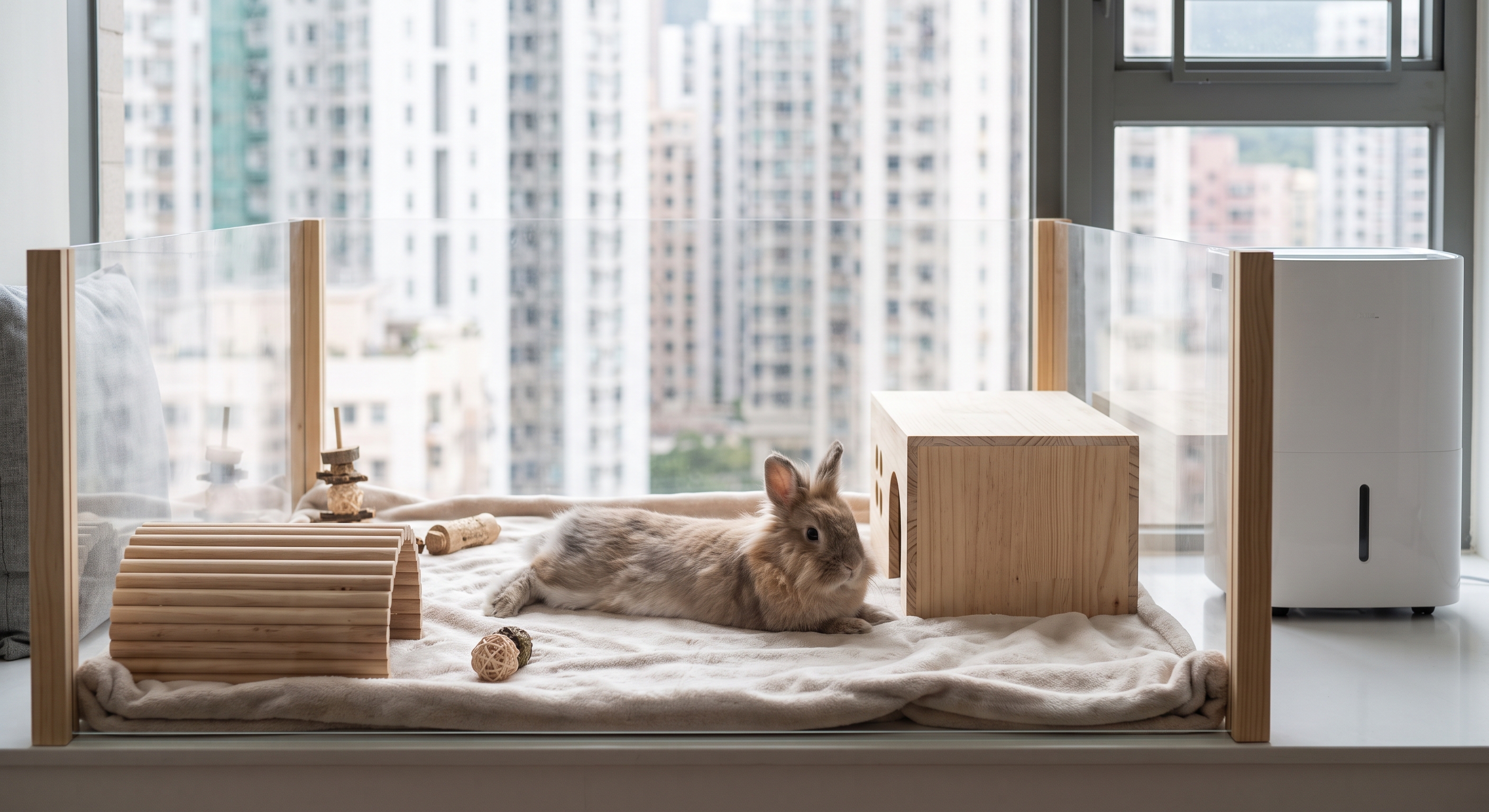
Small Animal Wellness in HK: Catification & Enrichment for Rabbits, Guineas, and Chinchillas
"In Hong Kong's complex living environments, rabbits, guinea pigs, and hamsters have become increasingly popular companions. These small mammals, however, possess very specific metabolic and physiological needs that require a highly controlled, enriched ecosystem within limited space."
Achieving stability (Optimal Physiological Wellness) is the foundational challenge for small pet parents in Hong Kong. Unlike cats or dogs, small mammals like rabbits and guinea pigs are exceptionally sensitive to environmental fluctuations and lack robust thermoregulation mechanisms. Within a compact apartment, creating a safe, stable domain that also facilitates natural behaviors (Mental Enrichment) requires precision management.
1. Environmental Stability and 24/7 Climate Control
The biggest physiological stressor for small pets in Hong Kong is the intense humidity and summer heat. Small mammals do not sweat efficiently; instead, they primarily regulate temperature through breathing (panting) or, for rabbits, their ears.
Optimal Ranges: For rabbits and guinea pigs, ideal temperatures range between 18°C–23°C (64°F–73°F). Continuous exposure to temperatures over 26°C (79°F) can cause rapid, life-threatening heatstroke.
The Humidity Factor: High humidity prevents efficient cooling through respiration. Aim for a consistent relative humidity between 50% and 60%. This optimized ecosystem promotes clear airways and stable metabolic function.
Smart Solutions: Utilize smart dehumidifiers and air conditioning systems with precise temperature control (Precision Management) and remote monitoring to ensure the habitat remains stable, even when you are away. Cages should always be positioned away from direct sunlight, drafts, and high-traffic acoustic pollution.
2. Precision management: Structuring Vertical and Horizontal Zones
Even within a small apartment, the layout of the pet's enclosure can be optimized to facilitate natural behaviors (Physical Enrichment):
Define Zones: Structure the domain into distinct zones for feeding, sleeping (Safety Anchors), exercise, and enrichment (mental stimulation). This creates a predictable, low-stress daily routine.
Verticality for Rabbits: Use secure, multi-level platforms for rabbits to satisfy their urge to climb and survey their territory.
Burrowing for Hamsters: Deep substrate (at least 15–20cm of soft bedding) is essential mental enrichment for hamsters, supporting their core drive to burrow and create intricate, safe domains (Precision Management).
3. Behavioral Enrichment, Foraging, and Metabolic Health
Small pets require meaningful interaction and behavioral outlets to break the urban boredom cycle (Mental Enrichment). Chewing, for instance, is not destructive behavior; it's a critical mechanism for dental wear and stress release:
Safe Chewing Outlets: Provide diverse, safe materials—cardboard tunnels, seagrass mats, and organic apple wood (Precision Management)—for constant mental stimulation (mental enrichment).
Interactive Foraging: Move beyond the food bowl. Scatter dry food or specific freeze-dried treats (a localized 'Sniffari') within substrate or inside foraging toys. Encouraging your pet to 'hunt' and navigate for food burns nervous energy, reinforces metabolic health, and prevents sedentary behavior.
4. Establishing Privacy and Stress Reduction (Prey Safety)
Small animals are prey species; psychological security (Cognitive Function) is their paramount concern. Their domain must include multiple secure hiding anchors where they feel completely safe from any solitary hours, environmental noise, or unexpected interaction:
Safety Anchors: Install covered boxes, fleece tunnels, or semi-closed nests (Safety Anchors). If multiple pets share a space, ensure there is one hiding spot per pet to prevent territorial conflict.
5. Smart Monitoring and Habit Data (Precision Management)
Technology allows owners to optimize and track wellness even when busy (Data-Driven Wellness). A small animal's health can decline rapidly, and behaviors are often subtle:
Camera Monitoring: Use smart home cameras (Precision Management) to discreetly monitor daily activity levels, drinking habits, and eating patterns without causing stress through constant human presence. Track changes in waste output (critical metabolic data) and appetite as early indicators of potential health fluctuation.
Optimizing Small Pet Life in Hong Kong
A controlled, stable environment is achievable, regardless of apartment square footage. By embracing a holistic approach that integrates climate stability, behavioral enrichment, and smart monitoring (Precision Management), you can build a safer, healthier ecosystem where your small companion truly thrives through all phases of life. A controlled physiological state leads directly to an optimized cognitive function and long-term stable wellness.
Viola Leung
Hi, I’m Viola Leung, founder of Furrenz Pet Sitters, responsible for the company’s day-to-day operations.