Preparing Your Home for a First-Time Pet Sitter Visit in Hong Kong: The Ultimate Safety Checklist
Opting for an in-home pet sitter for the first time naturally comes with a mix of excitement and anxiety.
Leaving your companion in their natural home environment is undeniably the best way to minimize Stress Reactions caused by change. However, creating a smooth, secure experience for both your pet and the incoming caretaker requires systematic pre-trip organization.
A home layout that feels completely second nature to you may present subtle friction points or hidden safety hazards to a first-time visitor. Implementing proper home safety measures and supply organization fosters Mutual Peace of Mind. Here is an essential 4-step preparation guide compiled by care professionals.
1. Comprehensive Home Hazard and Security Assessment
In Hong Kong's compact living arrangements, security lies entirely in the details:
Window and Balcony Security: Windows and doors form your home's primary protective barrier. Inspect all window mesh screens, balcony latches, and gate locks to ensure they are damage-free and completely secure before leaving.
Hazard Storage: Store away potential hazards into closed cabinets—including human medications, cleaning chemicals, toxic foods, and dangerous indoor plants.
Cable Management and Hiding Spots: Secure exposed charging cables with cable protectors to prevent chewing. Additionally, block off tight, inaccessible crevices behind heavy furniture where timid pets might hide and become trapped.
2. Supply Organization and Visible Placement
Allowing your caretaker to quickly locate supplies frees up more dedicated time for play, grooming, and mental stimulation:
Diet Portioning and Labeling: Stock enough main food, wet food, and treats for the duration of your trip, plus a 5-to-7-day buffer for unexpected travel delays. Pre-apportion complex meals into sealed bags clearly labeled with morning/evening intake amounts.
Centralized Hygiene Stations: Consolidate supplies—cat litter, puppy pee pads, pet-safe disinfectants, paper towels, and waste bags—in a visible, easily reachable location.
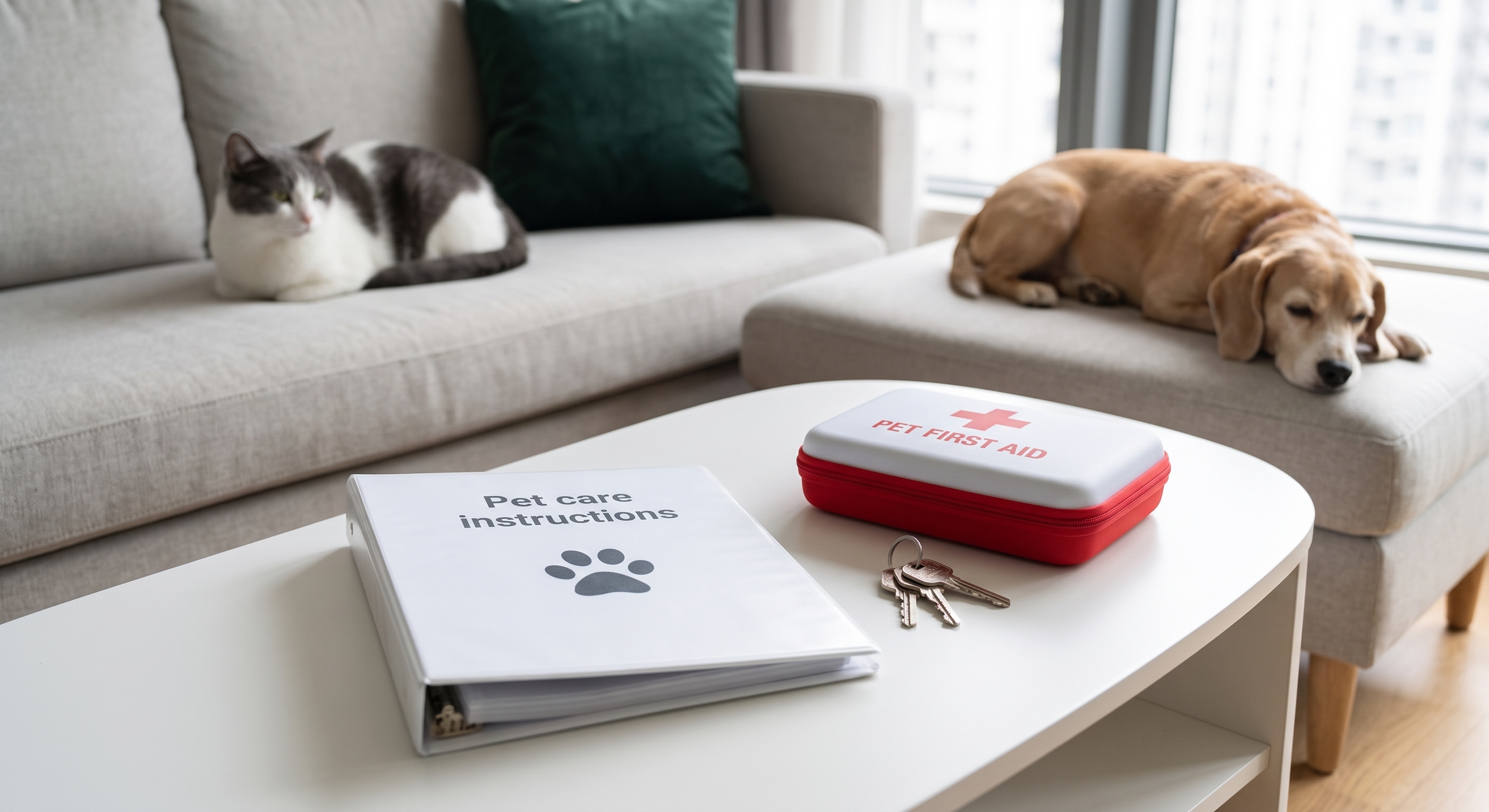
Medication and First Aid: If your pet requires prescription medication, clearly detail dosage and administration timing, placing the meds beside a complete pet first aid kit.
3. Emergency Documentation and Care Instructions
Transparent instructions enable swift, accurate decision-making during unexpected events:
Behavioral & Routine Brief: Document traits—such as fear of loud noises, preferred hiding spots, eating speeds, and favorite walking routes or harness types.
Emergency Medical Binder: Compile a dedicated folder containing your pet’s microchip ID, vaccination records, primary vet contacts, and the address/phone number of the nearest 24-hour emergency hospital.
4. The Pre-Trip Walkthrough and Introduction
Establishing early rapport is essential for building trust:
Pre-Departure Meet & Walkthrough: Schedule a brief walkthrough with your caretaker prior to your departure date. This allows your pet to become accustomed to their scent and voice in your presence, while giving you the opportunity to explain key codes, water valves, and smart home appliances in person.
Thorough, systematic preparation turns travel anxiety into complete peace of mind. By securing your apartment and organizing daily supplies, you ensure your beloved pet remains safe, comfortable, and well-cared for in their own home sanctuary.

Philip Chau
Hi, I’m Philip Chau, one of the founders of Furrenz Pet Sitters, coordinating the company’s marketing.